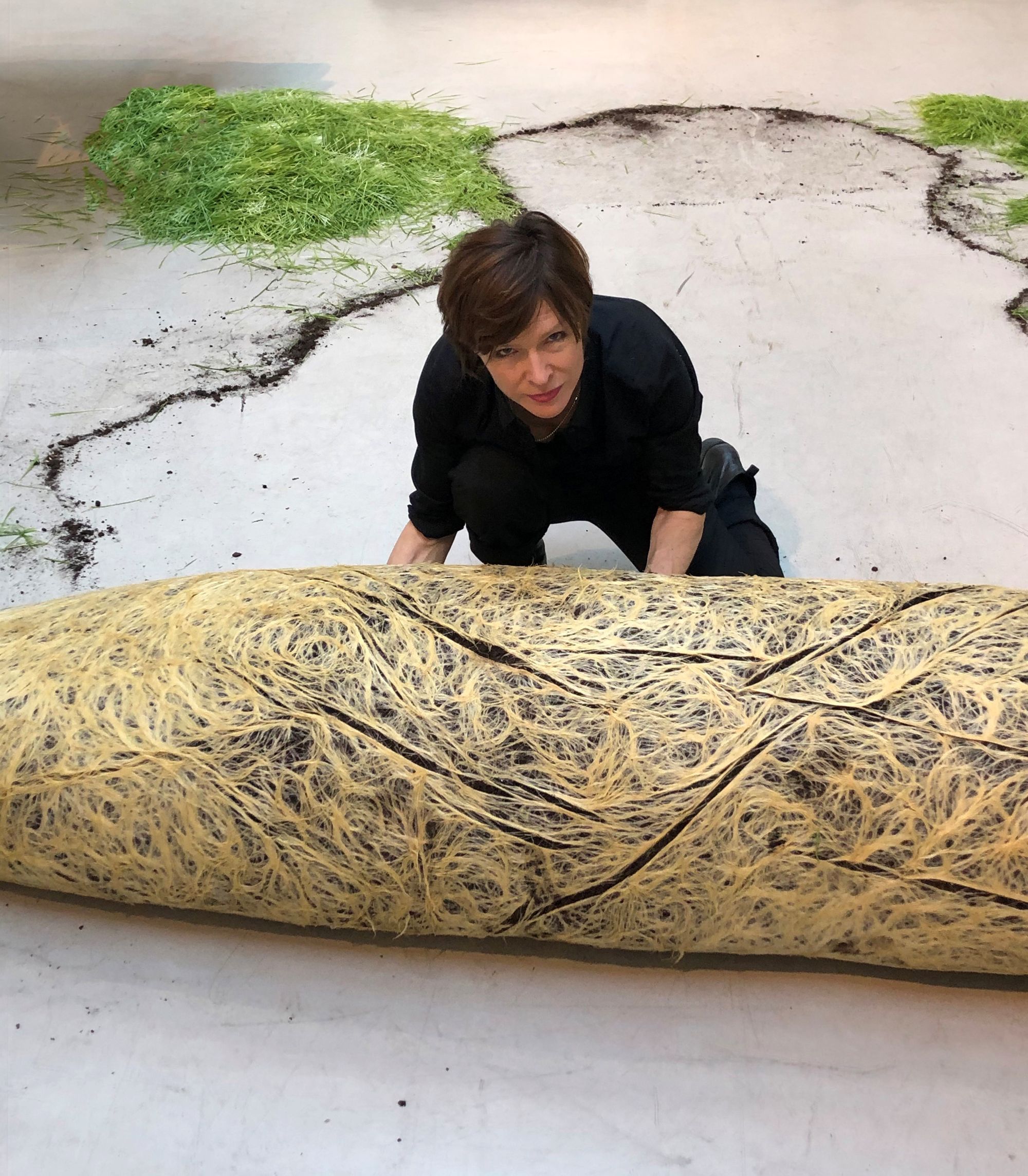
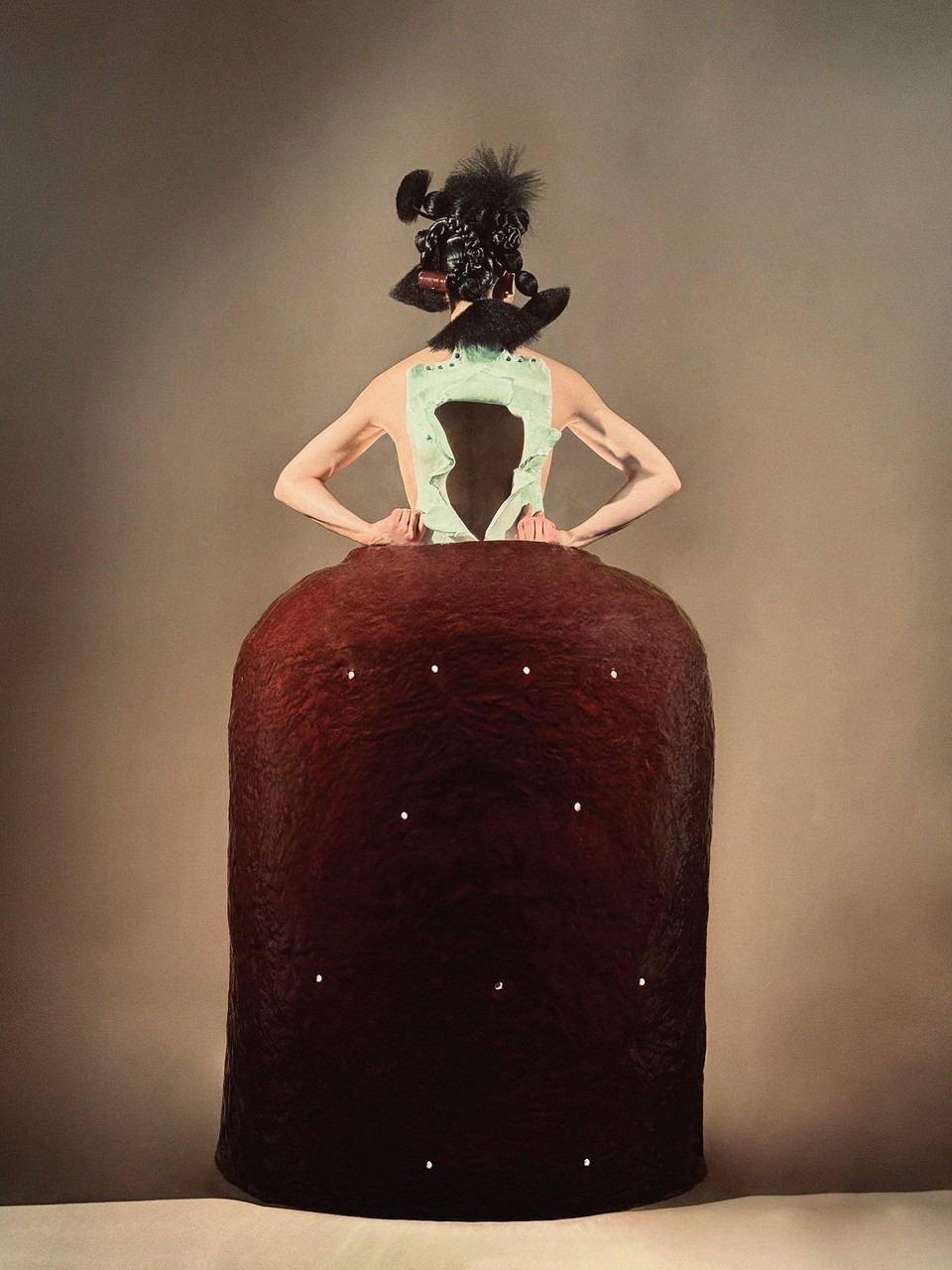
To what extent can humans influence natural processes? And what does that mean for the role or position of humans in their natural environment? In her work, Diana Scherer explores the boundaries between plant culture and nature.

Farming Textiles
Diana Scherer
Exhibition space 5
Artist Diana Scherer (DE, 1971) creates botanical installations, objects, textiles, and photography, and is a pioneer in biotechnological art. Scherer is driven by admiration for and curiosity about what neurobiologists call the ‘brain of plants’. She studies plants and root systems in order to control their natural growth processes. In her studio, she creates artificial biotopes to grow her work using soil, seeds, light, and underground templates in both natural and man-made patterns. Scherer guides the roots so that they grow according to her patterns. This creates intriguing organic fabrics that not only reveal nature subjugated by humans, but also the limits of that subjugation: nature ultimately demands its own chaos wherever possible.
With her presentation Farming Textiles at Museum Kranenburgh, Diana Scherer is showing her art for the first time in a large, solo museum presentation featuring many new works. She presents the root systems she has created as textiles or as living sculptures that allow you to follow the growth process of the roots.
In her work, Scherer explores the relationship between humans and the natural environment, as revealed by the boundaries between (plant) culture and (plant) nature. In doing so, she raises questions about what is natural and what is not. To what extent can humans influence natural processes? And what does that mean for the role or position of humans in their natural environment? These are topical questions at a time when the Earth’s climate and atmosphere are undergoing irreversible changes as a result of human activities.
Scherer’s work deals with the tension between the human urge to control nature and the uncontrollable power of nature itself. Scherer depicts this in a poetic and meaningful way, while at the same time being innovative in her use of materials. Her work is unique, topical, and urgent.

Publication
A publication has been released to accompany the exhibition: Diana Scherer, Interwoven, exercises in root system domestication, Jap Sam Books, 2023.
Home assignment for children
Stamping Textiles
In this workshop inspired by the work of Diana Scherer and the exhibition Farming Textiles, you will make your own T-shirt at home in eight steps, with a print of fruit and vegetables from the refrigerator.
Click here to download and print the assignment.
Listen to the podcast
Podcasts are produced for the exhibitions at Museum Kranenburgh in Bergen (North Holland). Listen to stories, interviews, and background information. Perfect to enjoy before, during, or after your visit to the museum.

Onder de grond nog mooier dan erboven (met Diana Scherer en Colin Huizing)
‘Farming Textiles’ in Museum Kranenburgh is Diana Scherers…
Hoe ‘intelligent’ zijn plantenwortels? (met Norbert Peeters)
‘Farming Textiles’ in Museum Kranenburgh is Diana Scherers…

Het belang van biodiversiteit: ook (of juist!) onder de grond (met Liesje Mommer)
‘Farming Textiles’ in Museum Kranenburgh is Diana Scherers…
Artworks
Diana Scherer
Interwoven
Partners